Essential Crochet Tools and Materials for Beginners
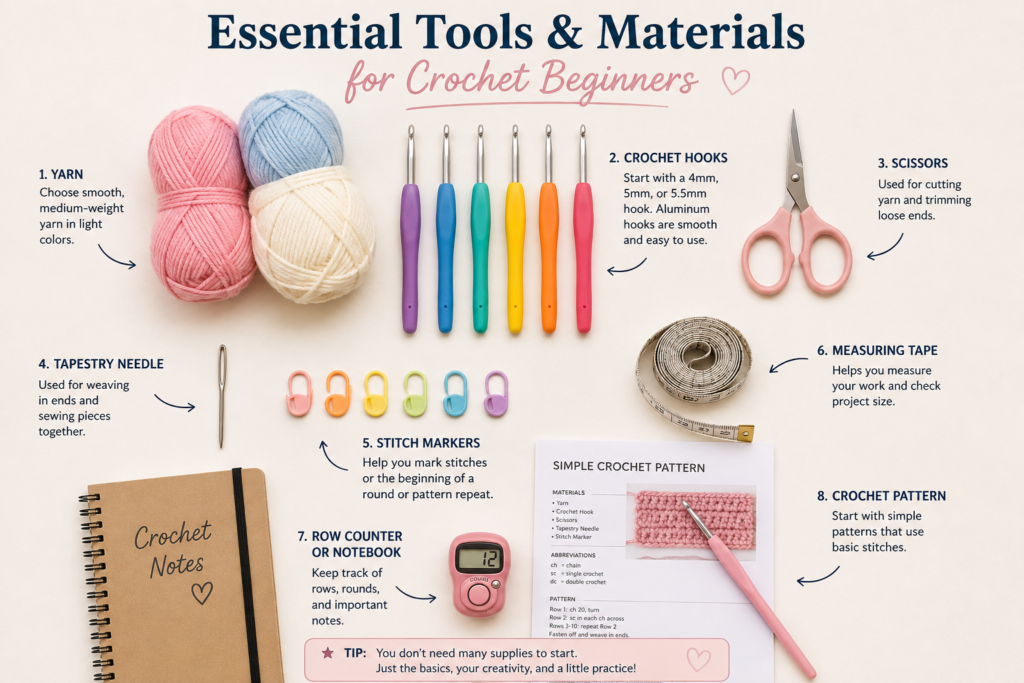
tarting crochet is easy when you have the right tools and materials. Beginners do not need a large collection of supplies. A few basic items are enough to learn fundamental stitches, practice techniques, and eventually create simple projects such as scarves, coasters, granny squares, and small accessories.
Firstly. Crochet Hooks
A crochet hook is the most important tool for crochet. Hooks are available in different sizes, usually measured in millimeters. The size you choose should match the yarn you are using. For beginners, a 4 mm, 5 mm, or 5.5 mm hook is a comfortable starting point because these sizes work well with medium-weight yarn.
Crochet hooks can be made from aluminum, steel, bamboo, or plastic. Aluminum hooks are particularly popular because they are lightweight and allow yarn to move smoothly.
2. Yarn
Yarn is the main material used to create crochet projects. It comes in different weights, colors, textures, and fibers. For beginners, medium-weight yarn is generally easier to handle because it is neither too thin nor too bulky.
A smooth, light-colored yarn is a good choice when learning. It makes individual stitches easier to see. Avoid very dark, fuzzy, or highly textured yarn at first because it can make stitches difficult to identify.
3. Scissors
A small, sharp pair of scissors is useful for cutting yarn when you finish a project or need to change colors. Choose scissors that are comfortable to handle and keep them with your crochet supplies so they are easy to find.
4. Tapestry Needle
A tapestry needle, also called a yarn needle, has a large eye that allows yarn to pass through easily. It is mainly used for weaving in loose yarn ends and joining crochet pieces together. Needles with blunt tips are commonly used for crochet projects.
5. Stitch Markers
Stitch markers help you identify a particular stitch or the beginning of a crochet round. They are especially useful when working on larger or more complicated projects. Beginners can use simple removable stitch markers, although a small safety-pin-style marker can also work.
6. Measuring Tape
A flexible measuring tape helps you check the size of your crochet project. It is useful when making items such as scarves, blankets, hats, or clothing where accurate measurements are important.
7. Row Counter or Notebook
Keeping track of rows and rounds can prevent mistakes, especially when following a pattern. You can use a digital row counter, a physical counter, or simply write the number of completed rows in a notebook.
8. Crochet Pattern
A crochet pattern provides instructions for creating a particular project. Beginners should start with simple patterns that introduce basic stitches such as chain stitch, single crochet, half double crochet, and double crochet. Choose patterns with clear instructions and, preferably, helpful diagrams or photographs.
9. Optional Accessories
As you gain experience, you may find other tools useful, such as a project bag, blocking mats, yarn bowl, crochet hook case, and stitch counter. These are not essential when you are starting, so there is no need to purchase everything at once.
Beginner’s Starter Kit
A simple beginner’s crochet kit can include:
- 1 medium-sized crochet hook
- 1–2 balls of medium-weight yarn
- Small scissors
- Tapestry needle
- A few stitch markers
- Measuring tape
- Simple beginner-friendly crochet pattern
- Notebook or row counter
Tip: Start with basic, affordable materials and practice regularly. Once you become comfortable with the fundamental stitches, you can experiment with different yarn weights, hook sizes, colors, and more advanced crochet techniques.