Learning how to crochet for beginners can be a simple and fun way to turn yarn into something creative. With just a crochet hook, suitable yarn, and practice, it is a relaxing skill that transforms simple stitches into designs.
This process helps you build confidence with each project. Additionally, as you gain skill, your designs become more personal and useful. Start with basic chain stitches and single crochets to practice. Keep your tension consistent and take breaks as needed.
Before you begin crocheting, it’s important to have the right tools and materials. Explore our [crochet tools guide] to learn about the essential supplies every beginner needs.
What makes crochet special is its simplicity. You do not need a large collection of equipment to begin. You only need a few basic materials and the willingness to practice. As your skills improve, simple stitches can gradually become detailed patterns and impressive designs.
What Is Crochet?
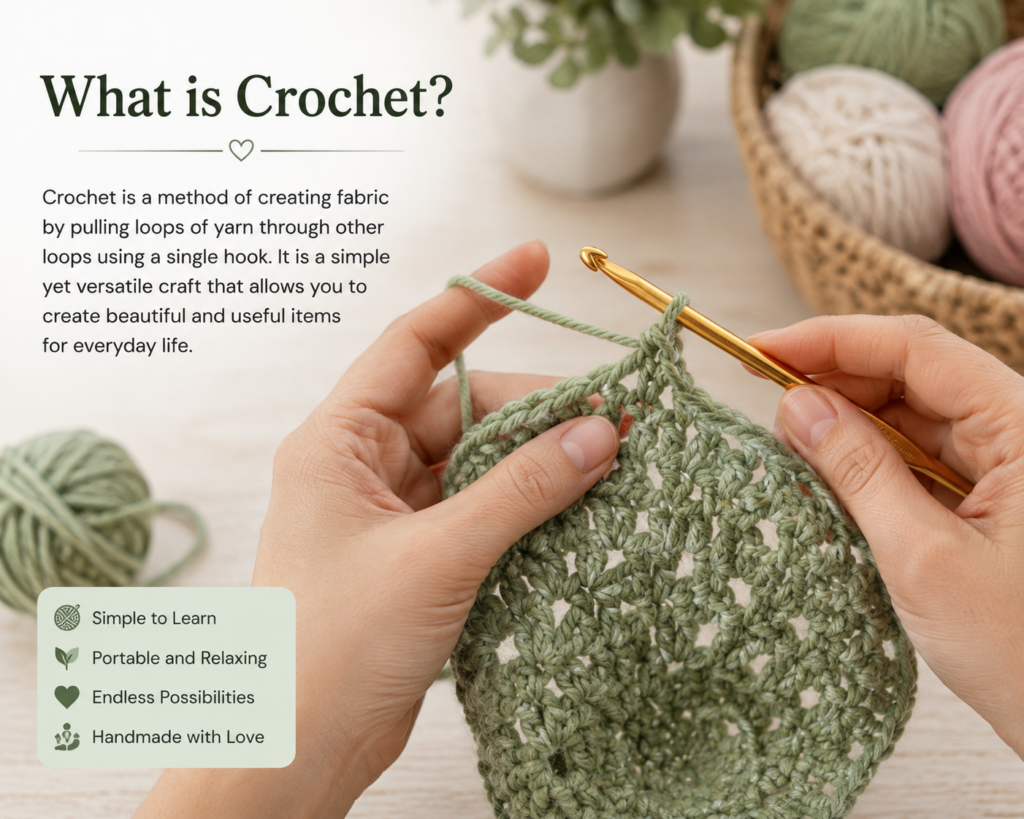
Crochet is a method of creating fabric by pulling loops of yarn through other loops using a single hook. Unlike knitting, which generally uses two needles, crochet is built around one hook and a continuous series of loops.
The beauty of crochet lies in its flexibility. A basic stitch can be repeated to create a simple piece, or several stitches can be combined to form textures, patterns, flowers, shapes, and intricate designs.
Crochet has been passed from one generation to another, but it continues to evolve.
Today, traditional techniques are being combined with modern colors, contemporary patterns, and creative designs. This demonstrates how to crochet for beginners can be approachable for all skill levels.
Why Learning How to Crochet for Beginners Is Worth It?
Learning crochet is not simply about making an object. It is about developing a creative process.
One of its biggest advantages is that you can start small. A beginner does not need to immediately attempt a complicated blanket or detailed garment. A small coaster, simple scarf, or basic square can provide enough practice to understand how stitches work.
Crochet also gives you control over the final creation. You can select the yarn, color, texture, size, and pattern according to your own idea. That makes every handmade project slightly different.
Another appealing feature is its portability. A hook and a small ball of yarn can easily become a creative activity that fits into your free time.
How to Crochet for Beginners: Essential Tools and Materials
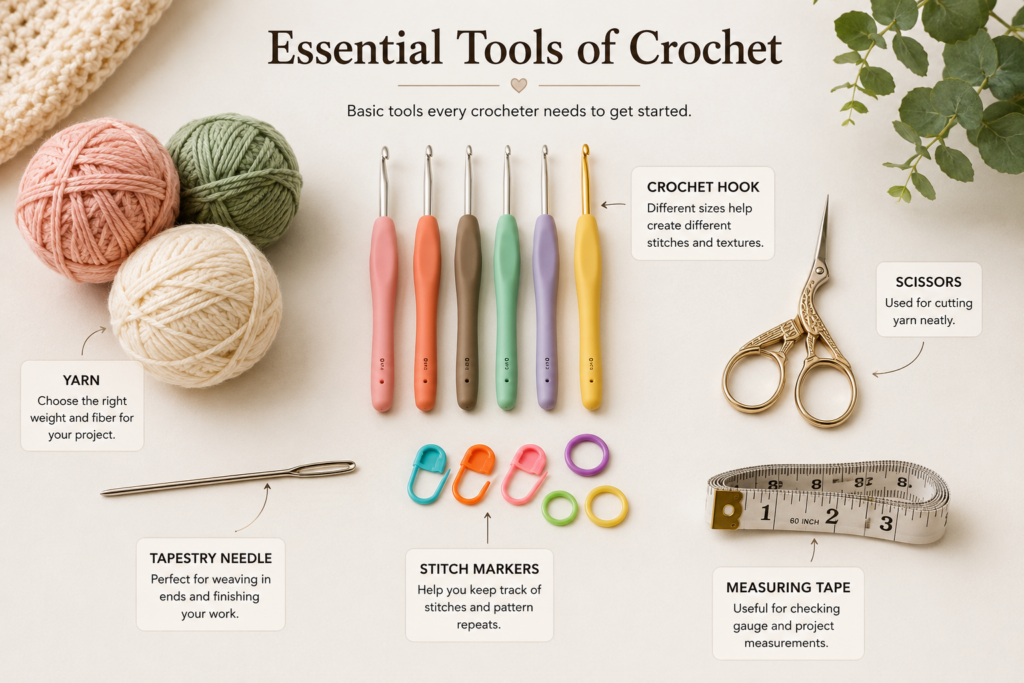
You do not need an extensive craft collection when starting out. A few essential supplies are enough.
1. Crochet Hook
The hook is your primary tool. Crochet hooks are available in different sizes, and the appropriate size usually depends on the yarn and the type of project you are making.
2. Yarn
Yarn is the material that becomes your finished fabric. Cotton, wool, acrylic, and blended yarns are among the commonly used options. Beginners often find a smooth, medium-weight yarn easier to handle.
3. Scissors
A small, sharp pair of scissors makes it easy to cut yarn neatly when changing colors or completing a project.
4. Tapestry Needle
This needle is useful for hiding loose yarn ends and giving the finished piece a clean appearance.
5. Stitch Markers
Stitch markers can help you identify particular stitches or the beginning of a round, especially when working with patterns.
Understanding the Basic Crochet Process
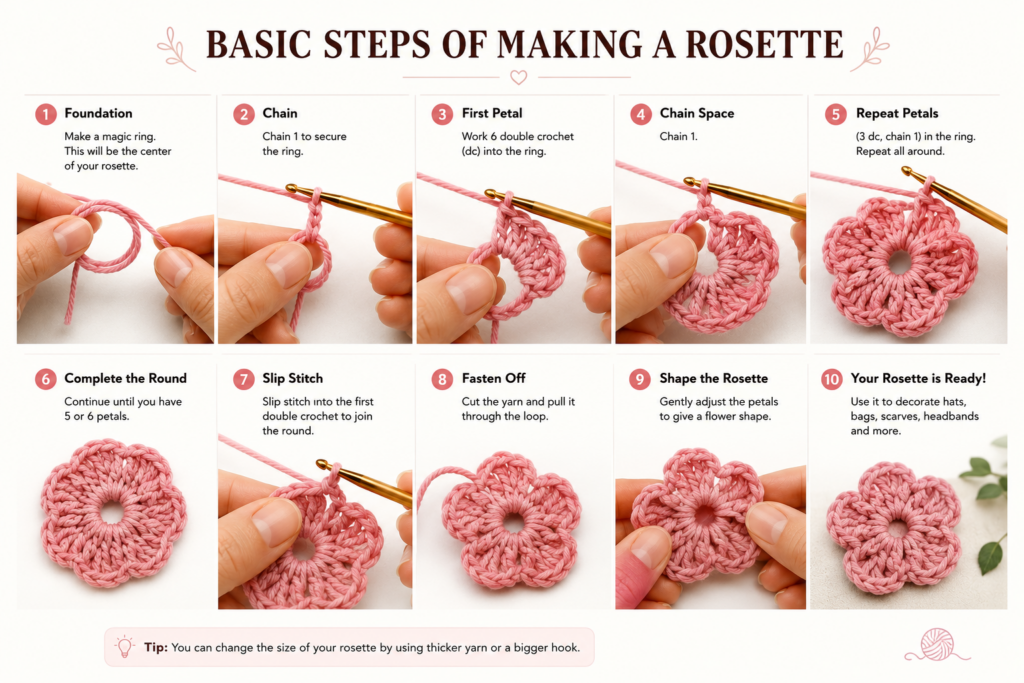
The first steps of crochet may look complicated, but the process becomes much easier once your hands become familiar with the movement.
A slip knot creates the starting loop that sits on the crochet hook. It should be secure enough to hold but loose enough for the hook to move comfortably.
The chain stitch usually forms the foundation of a crochet project. You pull yarn through the existing loop repeatedly to create a connected row of stitches.The number of chains you make depends on the size and pattern of your project.
Once you are comfortable with chains, you can begin practicing fundamental stitches such as single crochet, half double crochet, and double crochet.
Each stitch creates a slightly different height and texture. Understanding these differences allows you to build more interesting designs.
After creating your foundation, you work stitches into the chain or previous row. At the end of a row, you turn the work and continue in the opposite direction.
This repeated movement gradually transforms loose yarn into a structured fabric.
When your design reaches the desired size, the final step is to secure the yarn and weave the loose end into the fabric. A neat finish can make a simple project look much more polished.
Beginner-Friendly Crochet Projects
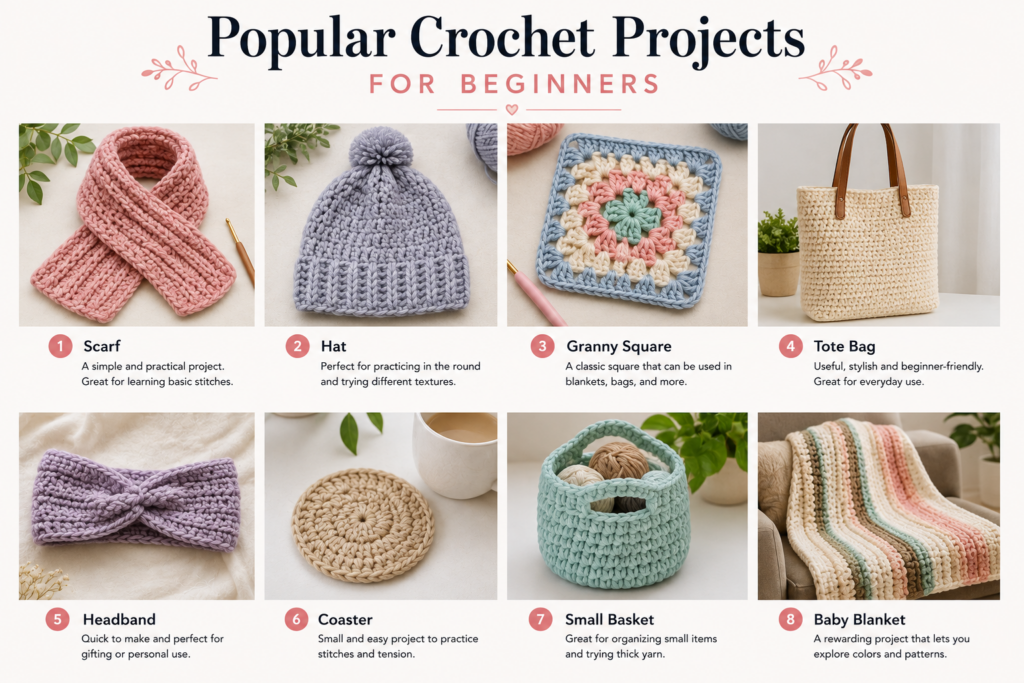
One of the best ways to learn is by creating something small and useful. For how to crochet for beginners, starting with simple, practical projects helps reinforce basics and keep motivation high. To build skills, choose projects that give you a reason to keep practicing.
Additionally, once you are comfortable with the basic stitches, you can start exploring simple crochet patterns and creative project ideas. Ravelry is a useful resource for discovering a wide variety of crochet patterns and projects.
Crochet Scarves
A scarf is a practical project for learning how stitches behave across longer rows. You can experiment with different colors and textures while creating something you can actually use.
Granny Squares
Granny squares are small crochet motifs that can later be joined together. They are excellent for practicing repetition and color combinations. Multiple squares can eventually become blankets, cushions, bags, or other decorative pieces.
Crochet Hats
Once you understand basic increases and decreases, you can explore simple hat patterns. Hats also provide an opportunity to experiment with yarn thickness and texture.
Crochet Bags
A handmade crochet bag can combine creativity with everyday usefulness. Simple shapes are suitable for beginners, while more advanced makers can experiment with handles, patterns, pockets, and decorative details.
How to Crochet for Beginners: How to Build Your Skills
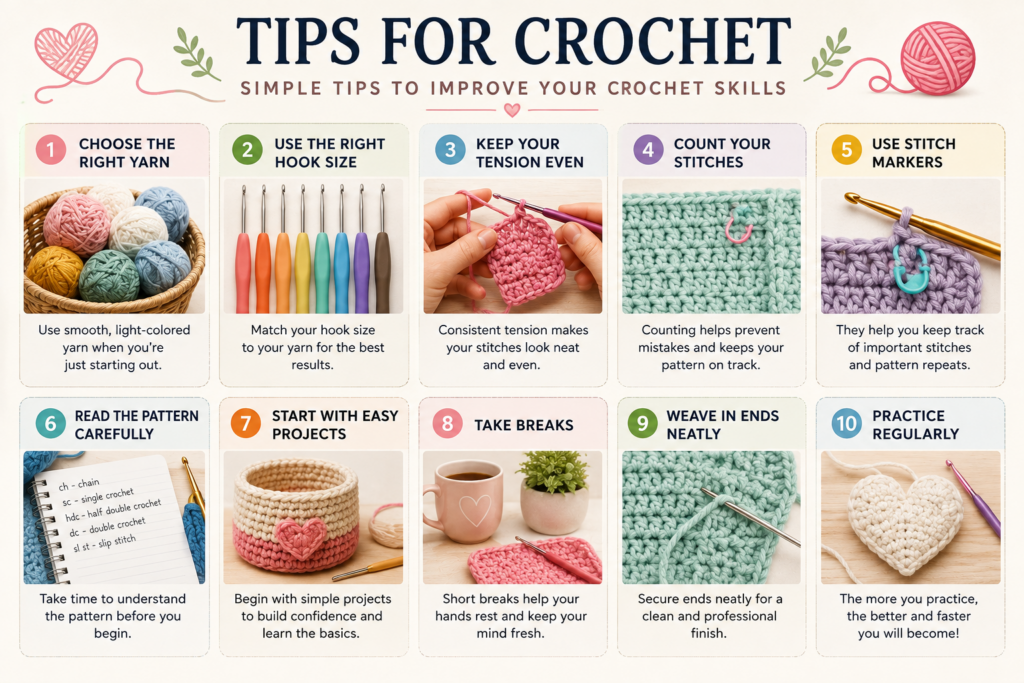
For beginners learning to crochet, good results come from practicing the basic movements rather than rushing through a pattern.
Keep your tension consistent. Your pressure on the yarn can affect the size and appearance of your stitches. Try to maintain a comfortable rhythm rather than pulling the yarn too tightly.
Choose suitable yarn.
Extremely thin or textured yarn can make the stitches difficult to see when you are learning. A smooth yarn makes it easier to understand what your hook is doing.
Start with manageable projects.
Completing a small project can build confidence. Once the basic movements feel natural, you can gradually move toward larger designs.
Count carefully.
Losing or adding a stitch can change the shape of your project. Counting stitches regularly is especially useful when following a pattern.
Accept mistakes as part of learning.
Unpicking a few stitches is normal. Sometimes the fastest way to understand a technique is to make an error and discover where the pattern changed.
Common Crochet Mistakes Beginners Make
As beginners learn how to crochet, a few common problems may occur along the way.
One common mistake is making the starting chain too tight. If the foundation is difficult to insert the hook into, the rest of the project can become uncomfortable to work.
Another issue is inconsistent tension. When some stitches are very loose and others are tight, the finished fabric may look uneven.
Beginners may also accidentally skip the first or last stitch of a row. This can gradually reduce the width of the project. Counting stitches and identifying the row edges can help prevent this.
Choosing an overly complicated pattern too early can also make learning frustrating. A simple project provides a better opportunity to understand the fundamentals before moving toward advanced designs.
Choosing the Right Crochet Project
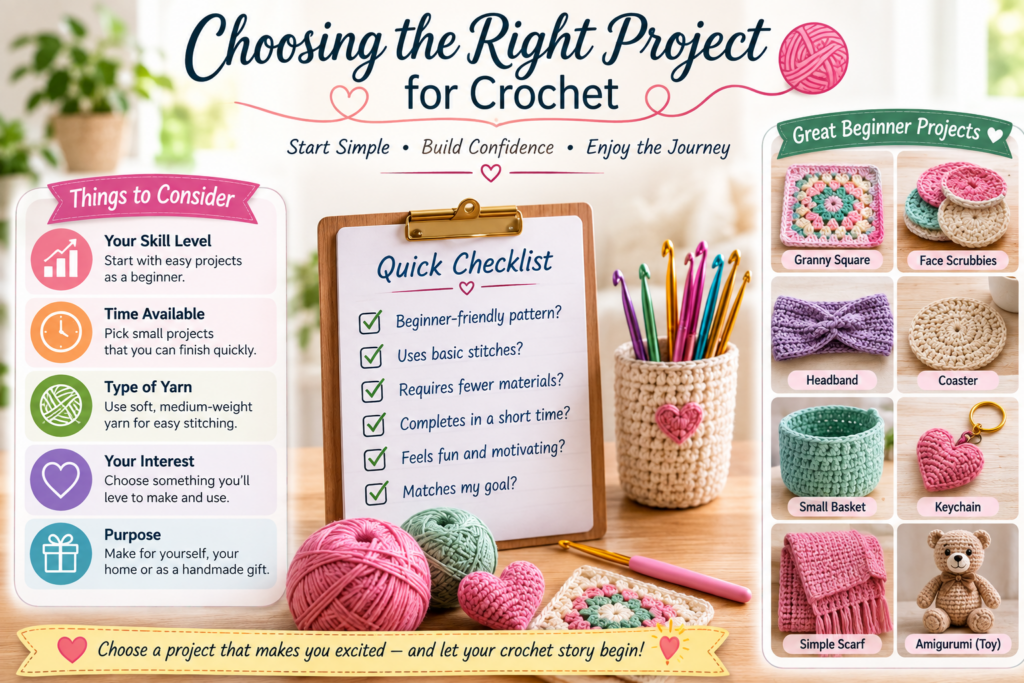
The best project is not necessarily the most complicated one. It is the project that matches your current skill level while giving you enough room to learn something new.
Choosing the right crochet project makes learning how to crochet as a beginner easier, more enjoyable, and better suited to your skill level.
If you are completely new to crochet, begin with a small flat project. Once you become comfortable with basic stitches, experiment with granny squares, simple accessories, or small home décor pieces.
As your confidence grows, you can explore three-dimensional designs, garments, decorative motifs, textured patterns, and larger projects.
The goal is not to finish the most difficult design. The goal is to understand the technique well enough that you can eventually create your own ideas
Crochet as a Creative Lifestyle
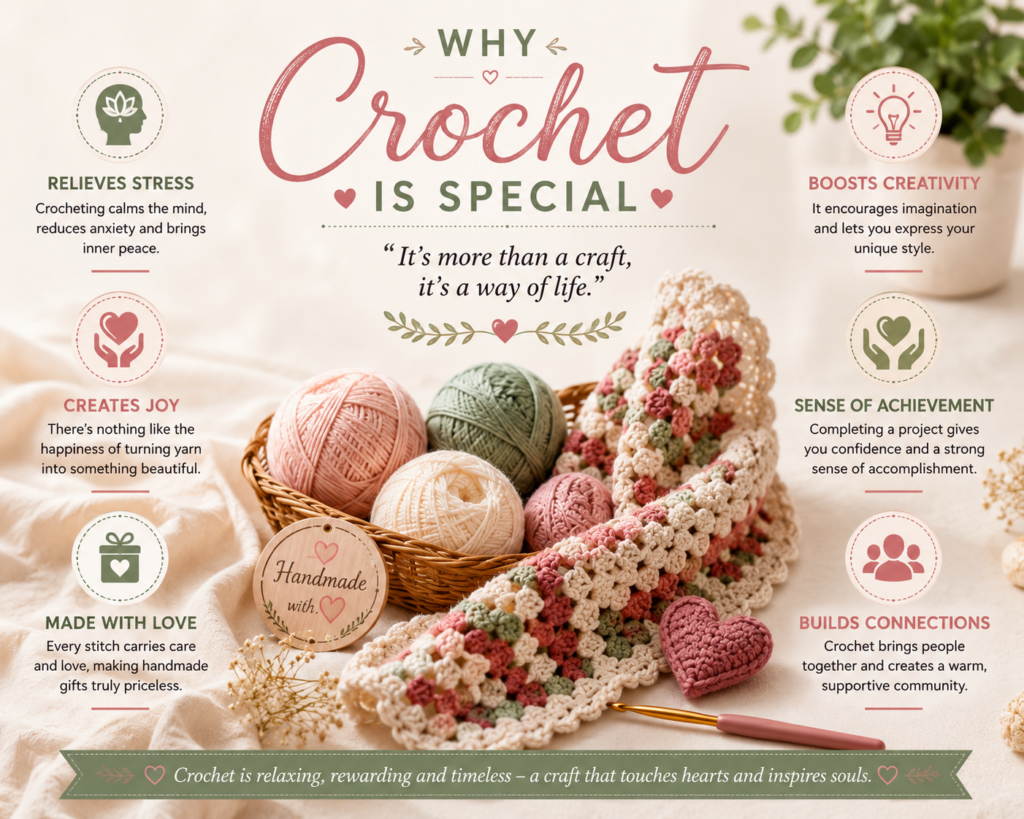
Crochet has an interesting quality: the finished item is only one part of the experience. The process itself can become a creative routine.
A quiet evening with a hook and yarn can provide an opportunity to slow down and concentrate on something tangible. Instead of instantly producing a finished result, crochet encourages you to build something gradually—loop by loop, row by row.
It can also become a way to personalize everyday objects. A handmade bag can reflect your preferred colors. A blanket can combine meaningful shades. A small decorative piece can add a handcrafted character to a room.
That personal element is one reason handmade crochet continues to appeal to people even in a world filled with mass-produced products.
Final Thoughts
Making crochet begins with something remarkably simple: a hook, a strand of yarn, and one loop. From that starting point, an entire creative world can develop.
You can begin with a basic chain, learn a few fundamental stitches, and slowly progress toward projects that express your own style. There is no need to master everything at once. Consistent practice, curiosity, and patience are more valuable than trying to become perfect immediately.
Whether you want to make a useful accessory, decorate your home, create a thoughtful handmade gift, or simply explore a new craft, crochet offers plenty of possibilities.
Pick up your hook, choose your yarn, and let the first loop become the beginning of something uniquely yours.